How many promotional products have you handed out at a trade show without knowing what happened next?
You ordered 1,000 giveaways. Attendees grabbed them. By the end of the show, the boxes were empty. Was that a successful promotion?
Not necessarily.
Handing out merchandise quickly doesn’t guarantee a good return on your trade show investment. If your goal is to get qualified leads, book demos, or connect with potential customers, your promotional products should support those aims.
The best trade show giveaway isn’t always the most eye-catching or costly. It’s the one that has a clear purpose.
Start With Your Trade Show Goal, Not the Giveaway
Before comparing pens, tumblers, chargers, and tote bags, answer one question:
What do you want attendees to do?
If your goal is to get your name in front of as many attendees as possible, an affordable product you can distribute in large quantities may make sense.
If you want attendees to stop for a product demonstration, you might choose a more desirable item that they receive after participating.
If you’re meeting with a short list of important prospects, spending more on fewer premium gifts could be a better use of your budget than ordering thousands of inexpensive giveaways.
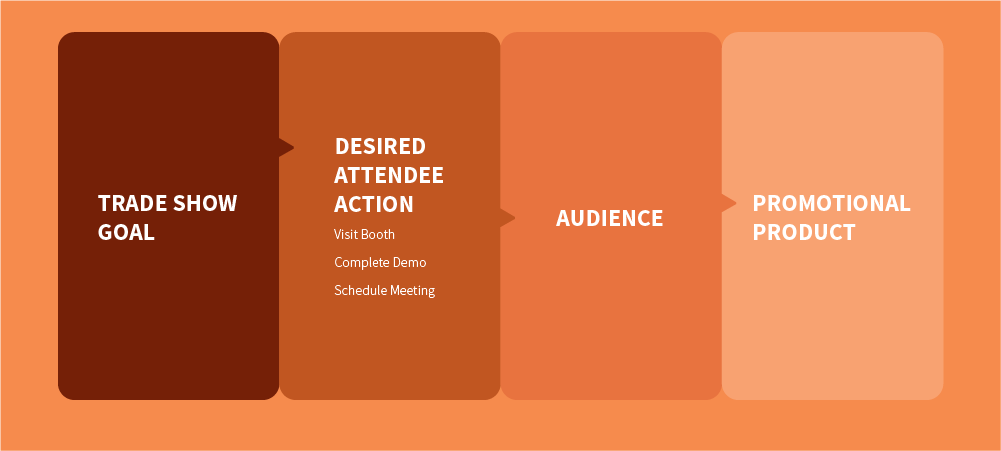
Your goals might include:
- Increasing booth traffic
- Collecting qualified leads
- Encouraging product demos
- Scheduling post-show meetings
- Thanking existing customers
- Starting conversations with target accounts
- Creating awareness around a new product or service
Each goal needs its own merchandise strategy. Decide what you want to achieve first, then figure out how promotional products can help.
Best for High-Volume Giveaways: Useful, Low-Cost Products
Not every person who walks past your booth needs a premium gift.
If you’re at a big trade show with thousands of people, lower-cost items let you hand out something useful without spending your whole budget right away.
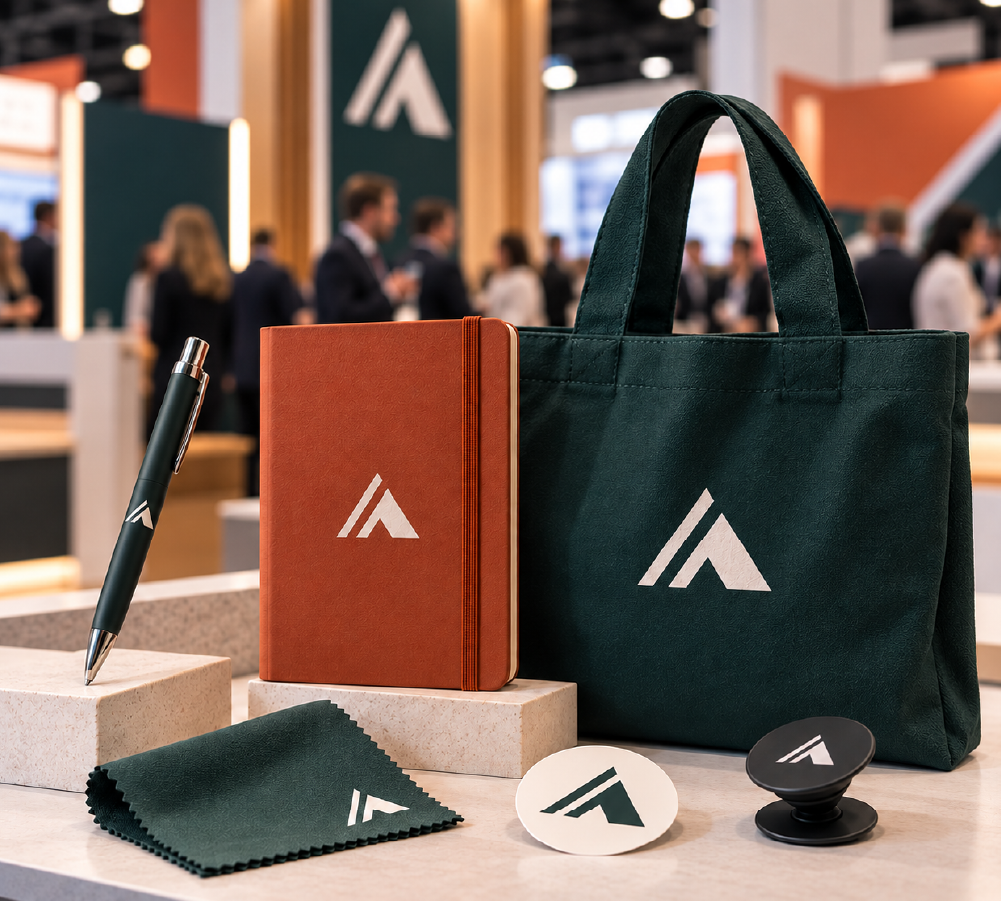
The key is choosing products people will continue using after the show. Consider items such as:
- Pens
- Notebooks
- Reusable tote bags
- Microfiber cleaning cloths
- Stickers
- Phone accessories
- Other compact, everyday products
A reusable tote is handy because attendees can use it right away to carry brochures and other giveaways. A good pen is also helpful when someone needs to jot down notes during a session.
Portability is important too. Attendees often walk around all day before packing up to go home. Small, lightweight items are easier to carry than bulky ones.
Affordable doesn’t have to mean boring. A creative design, unique shape, useful feature, or tie-in to your campaign can help a simple product stand out.
Best for Starting Conversations: Interactive or Unexpected Products
Sometimes the best trade show giveaway isn’t just something people grab. It’s something that makes them want to stop.
Interactive merchandise can become part of your booth experience. You might let attendees spin a prize wheel, choose between products, customize an item on-site, play a quick game, or earn merchandise after completing an activity.
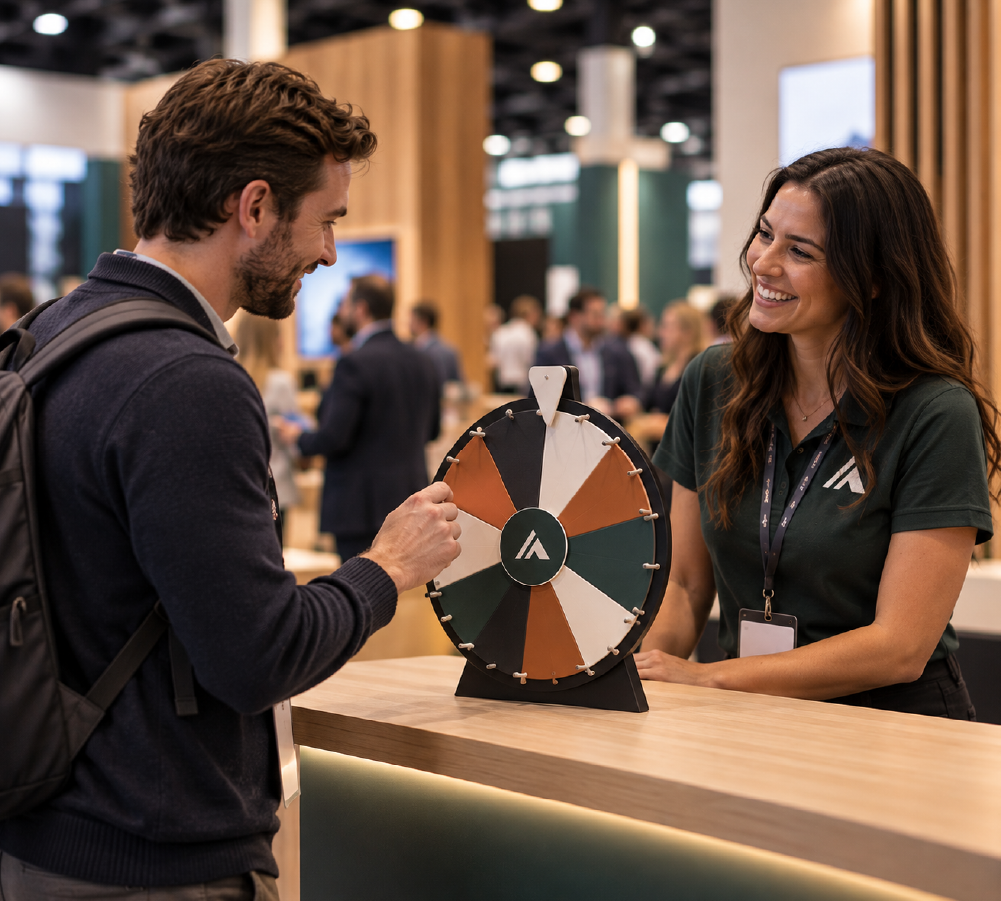
The product itself doesn’t necessarily have to be expensive. Custom socks, colorful sunglasses, small games, fidget products, patches, pins, or creatively designed everyday merchandise can work because they’re unexpected.
On-site personalization can take the experience even further. Attendees might choose a patch for a hat or bag, personalize an item with their initials, or select from several designs.
The experience you create around the merchandise is what matters most.
When someone stops to pick or customize a product, your team has a great chance to start a conversation. Make sure the experience ties back to your company. A busy booth isn’t helpful if people remember the activity but forget what your business does.
Use the merchandise to start a conversation, but don’t let it take over the whole interaction.
Best for Qualified Leads: Mid-Tier Merchandise
Someone who walks past your booth and grabs a pen isn’t necessarily the same as someone who spends 15 minutes talking with your sales team.
Your merchandise strategy shouldn’t treat everyone the same way either.
Mid-tier promotional products can be reserved for attendees who show greater interest in your company, such as someone who completes a product demo, attends a booth presentation, has a meaningful conversation with your team, or fits your ideal customer profile.
Consider products such as:
- Insulated drinkware
- Quality notebooks
- Charging accessories
- Tech organizers
- Caps
- Reusable totes
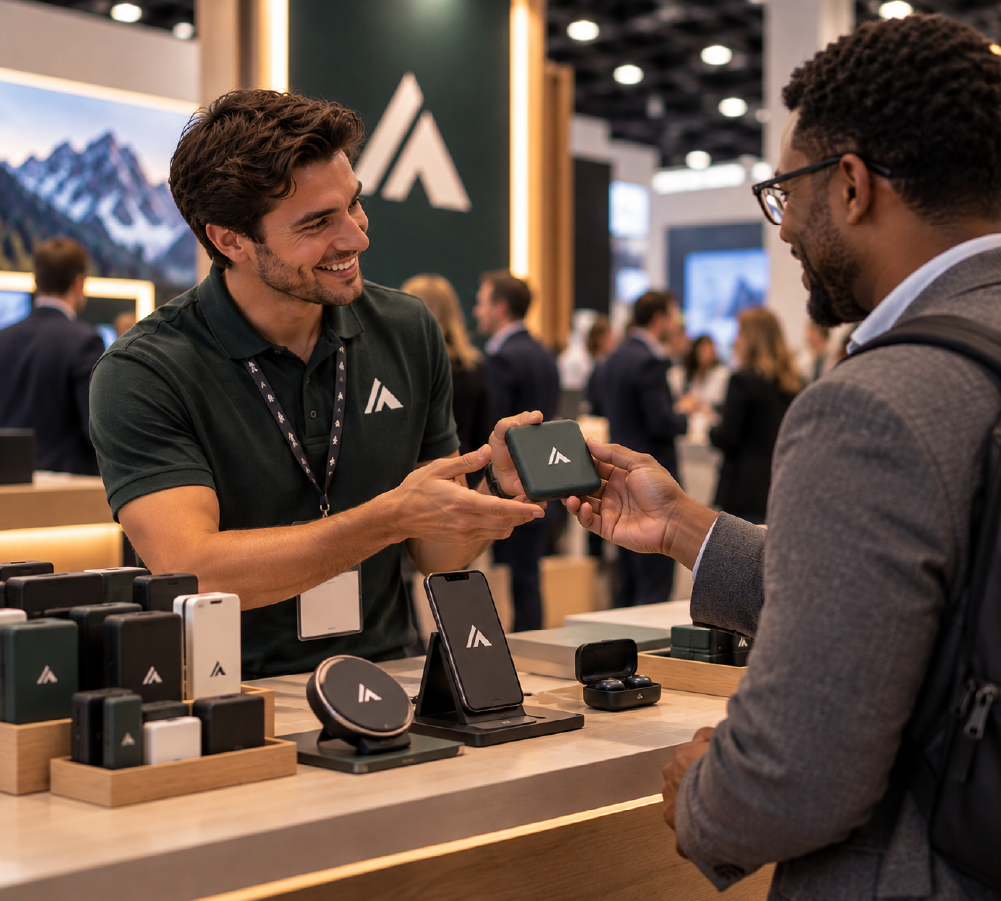
For example, you might give a small item to everyone who visits your booth, but save an insulated tumbler for those who complete a demo. This way, you spend more of your budget on the most valuable interactions.
Let attendees know what they need to do to get these products. Signs or a quick explanation from your team can set expectations early.
This approach also helps you manage quantities. Instead of buying 2,000 expensive items, you might only need a few hundred for people who really engage with your team.
Best for VIP Prospects: Premium Gifts
Some of your most valuable trade show conversations may happen with a relatively small number of people.
If you have scheduled meetings with key prospects, invited important customers, or identified target accounts your sales team wants to connect with, premium merchandise can make those interactions feel more intentional.
Consider products such as:
- Quality backpacks
- Premium drinkware
- Higher-end tech accessories
- Retail-inspired apparel
- Travel gear
- Curated gift sets
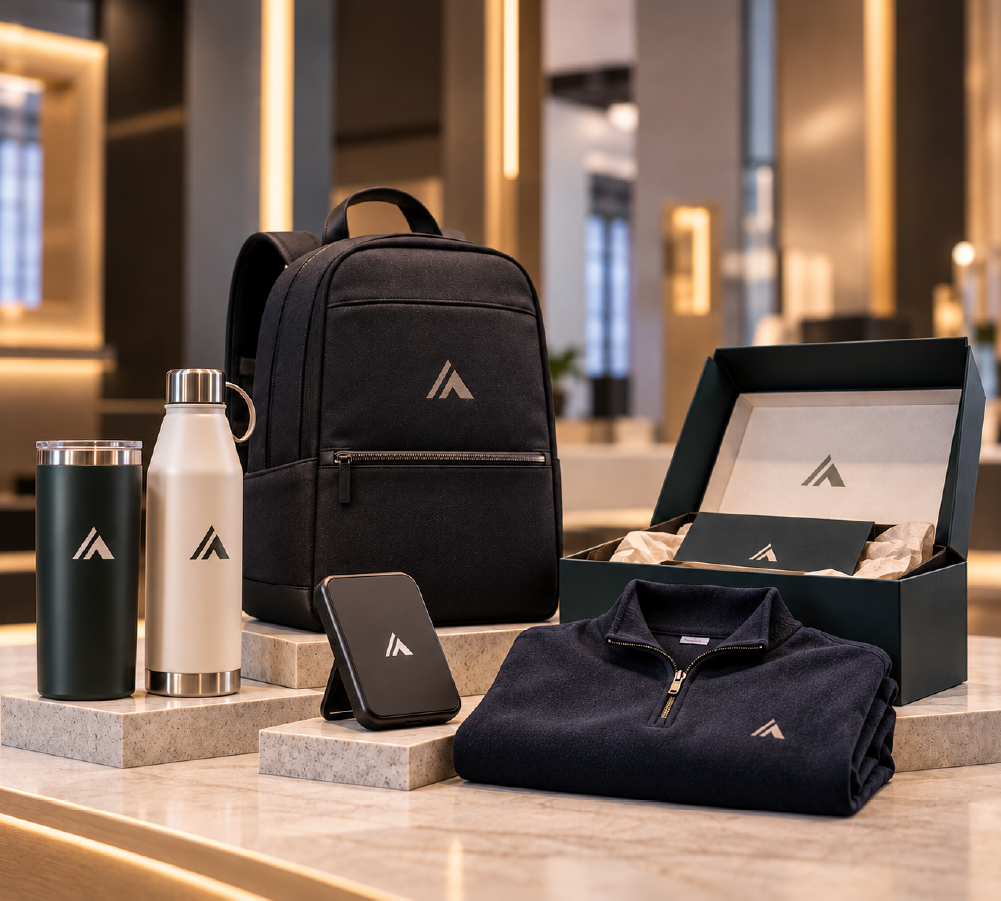
Instead of letting anyone take these products, save them for key meetings and important relationships.
You could have gifts waiting for key customers when they visit your booth, send a premium gift to a prospect’s hotel room before a scheduled meeting, or have your sales team personally present one after a meeting or dinner.
Personal touches can make these gifts more special. Adding initials, a handwritten note, or picking a product based on what you know about the person makes the gift feel like real appreciation, not just another giveaway.
Premium gifts don’t need big logos. Subtle branding and thoughtful packaging often leave a better impression.
Consider a Tiered Giveaway Strategy
You don’t have to choose between ordering 2,000 inexpensive giveaways or 200 premium gifts. You can do both.
A tiered giveaway strategy means matching each product’s value to the kind of interaction you have with an attendee.
For example:
General attendees: Pens, stickers, microfiber cloths, or other affordable products you can distribute widely.
Engaged prospects: Insulated drinkware, notebooks, tech accessories, or other mid-tier merchandise for people who complete a demo or have a meaningful conversation.
VIP prospects and customers: Premium backpacks, apparel, electronics, travel products, or curated gift sets reserved for scheduled meetings and key relationships.
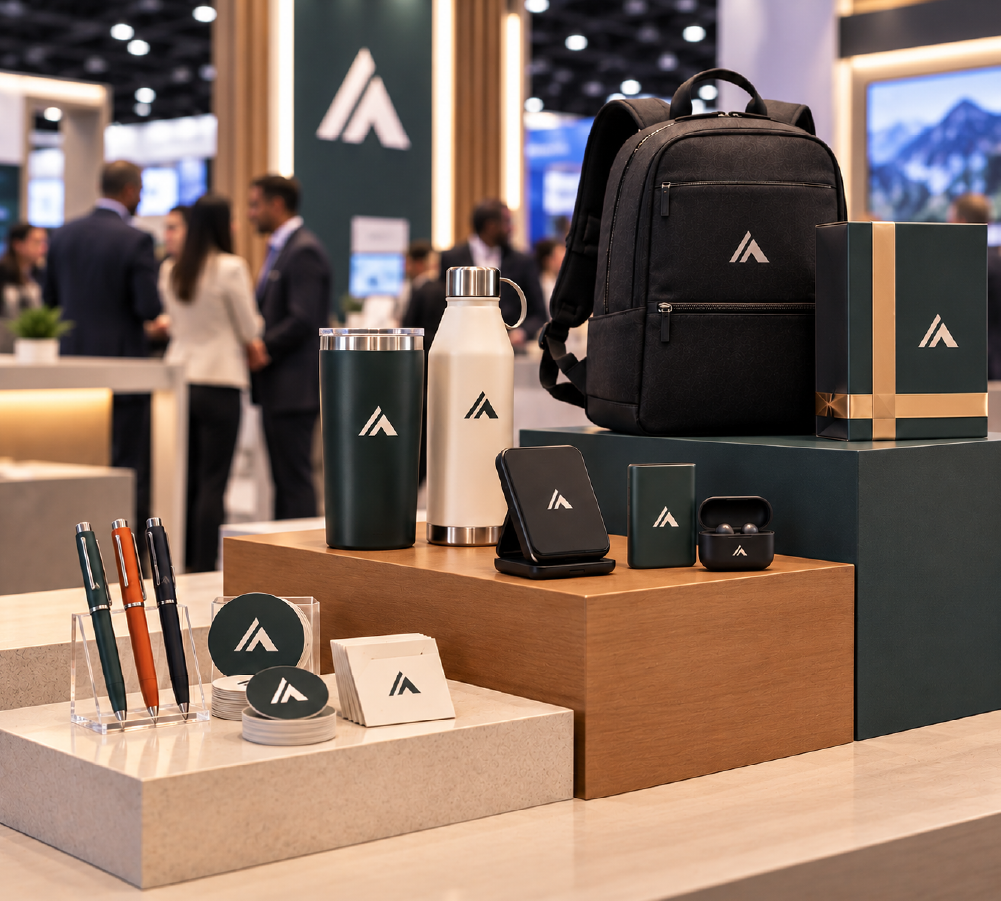
This way, you can spend more of your budget on the people and interactions that matter most, while still having something for everyone who visits your booth.
It can also make quantity planning easier.
If 5,000 people are expected at a conference, but your team anticipates 300 meaningful conversations and 50 scheduled meetings, you don’t need 5,000 higher-value products.
Plan how many of each product you need based on its purpose, and make sure your team knows the plan before the show. Everyone should know which products are for which attendees and what actions go with each one.
Don’t Forget the Trade Show Bag Problem
A giant promotional product might look great in your office, but imagine carrying it around a convention center all day.
Trade show attendees already juggle brochures, business cards, water bottles, laptops, samples, and other giveaways. If they traveled, everything they keep has to fit in a suitcase at the end.
Before ordering merchandise, consider:
- Is it easy to carry around the show floor?
- Will it fit inside a tote or backpack?
- Is it lightweight?
- Can someone reasonably pack it for a flight home?
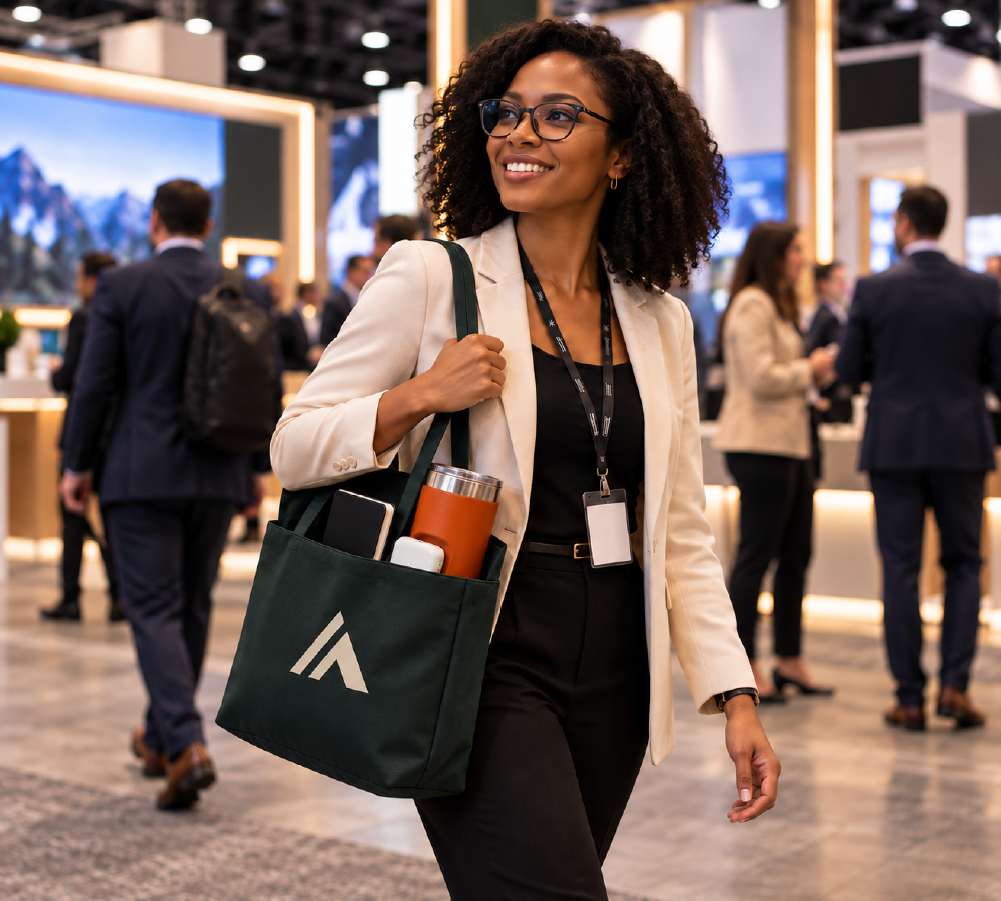
This doesn’t mean every trade show product has to be tiny. Larger merchandise can still work as a prize or VIP gift, especially if you offer to ship it directly to the recipient.
Packaging matters too. A fancy gift box can make a client gift feel special, but bulky packaging is a hassle on a busy trade show floor.
Think about what it’s like for attendees. If you wouldn’t want to carry the product all day and take it home, your prospects probably won’t either.
Make the Merchandise Part of an Action
If your promotional products sit unattended in a bowl, attendees can grab one without talking to your team.
Sometimes that’s fine. If broad awareness is your goal, easy distribution may be exactly what you want.
But if your goal is to get leads or encourage real conversations, try linking your giveaways to a specific action.
You could offer a product after an attendee:
- Watches a demo
- Participates in a booth activity
- Completes a short survey
- Schedules a consultation
- Attends a presentation
- Has their badge been scanned
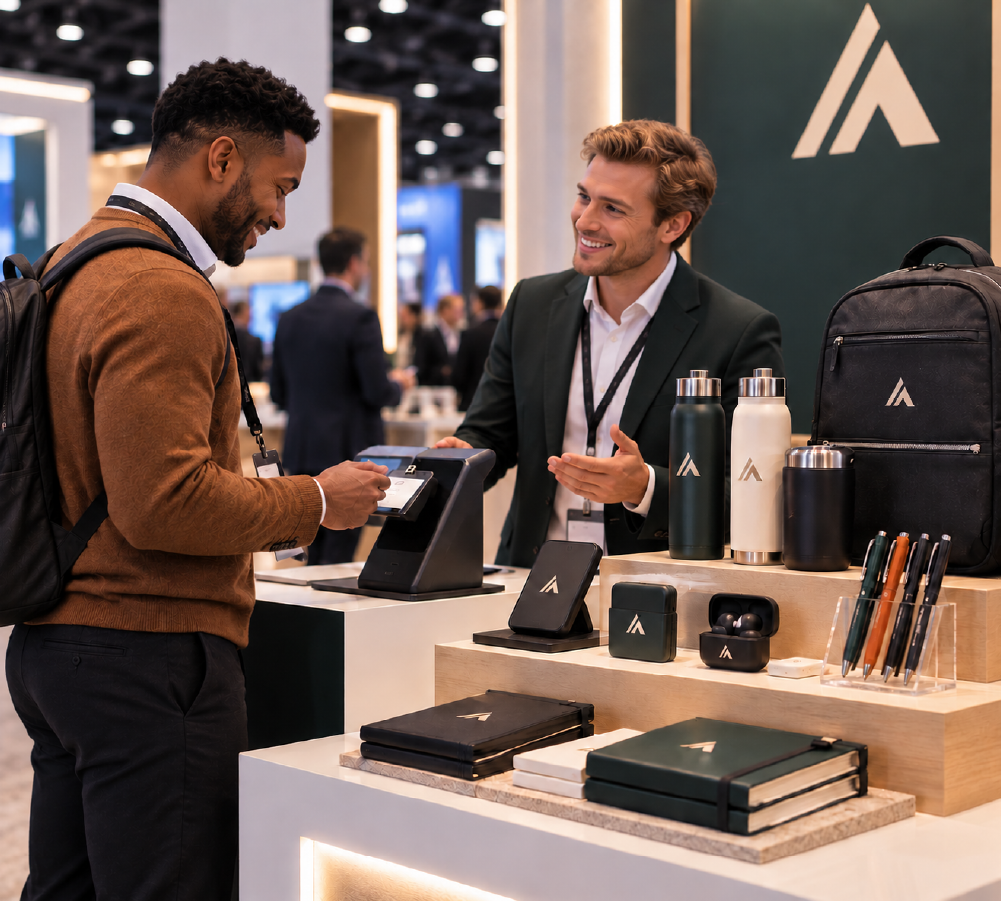
Make sure the exchange makes sense. Asking someone to sit through a long sales pitch for a small giveaway can leave a bad impression. Match the action you want with the value of the product you’re offering.
You can also make the action more interesting by incorporating merchandise into the experience. Let attendees customize a hat after a demo, choose a notebook color after attending a presentation, or earn a premium gift by completing several activities throughout your booth.
Now your merchandise does more than just fill up the giveaway table.
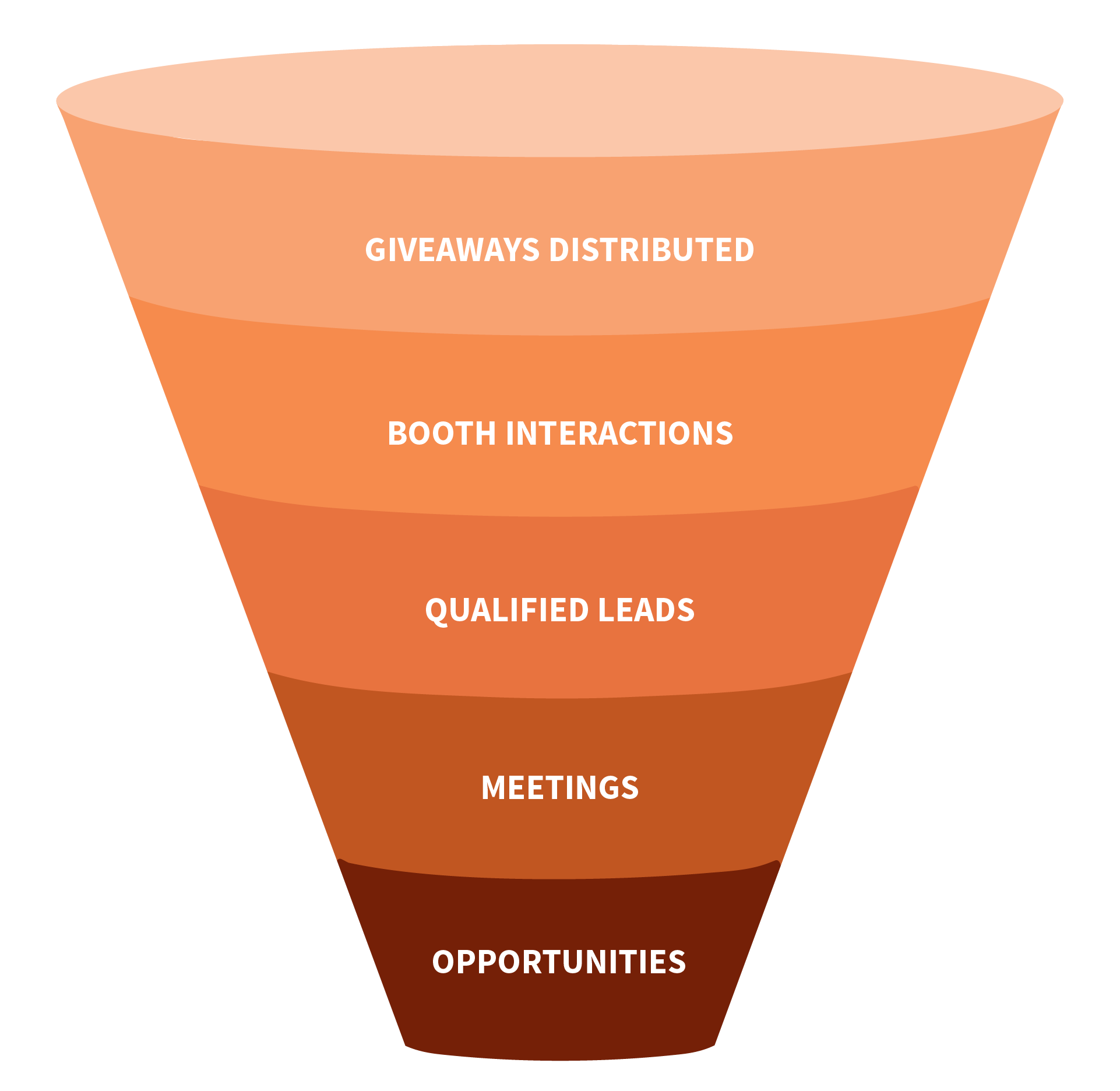
More importantly, you have something to measure. Instead of reporting that your team distributed 800 products, you can report that 250 attendees completed a demo, 75 scheduled follow-ups, or 40 target prospects attended a presentation.
How to Measure Promotional Product ROI
You gave away 1,000 promotional products. Was it worth it?
Counting how many products you gave away only shows how much merchandise left your booth. It doesn’t show if those products helped you reach your trade show goals.
To get a better picture of ROI, decide what you’re going to measure before the event.
Depending on your goals, that might include booth conversations, badge scans, product demos, presentation attendance, scheduled meetings, qualified leads, follow-up responses, sales opportunities, or eventual revenue where attribution is possible.
Next, compare those results to what you spent on merchandise.
For example, suppose you spent $4,000 on merchandise and used your best gifts for attendees who completed a demo. Rather than focusing on how many gifts disappeared, look at how many demos took place, how many resulted in qualified leads, and how many of those leads moved forward.
You can also compare strategies between events. Maybe premium gifts tied to scheduled meetings lead to stronger follow-up engagement, while a certain high-volume giveaway only attracts people who want free merchandise. That information can help you adjust your budget for the next show.
Keep in mind that promotional merchandise is just one part of your trade show investment. Things like booth location, your team, messaging, demos, and follow-up also play a big role in your results.
Your merchandise doesn’t have to be the reason for every sale to be valuable. What matters is knowing the part it played.
You don’t need to prove that a tumbler brought in a new customer. The real goal is to see if your merchandise helped create the interactions you wanted from your trade show strategy.
Don’t Measure Success by an Empty Giveaway Box
Running out of giveaways might show your booth was busy, but it doesn’t mean your trade show was a success.
The best trade show merchandise always starts with a clear purpose.
Maybe you need an affordable product you can hand to thousands of attendees. Maybe you want a better gift that encourages people to complete a demo. Or maybe your priority is creating a memorable experience for a small group of customers and high-value prospects.
You might even need all three.
First, decide what you want attendees to do. Then pick the right products, quantities, and price points to support those actions.
After the show, don’t just count empty boxes. Focus on the conversations, demos, qualified leads, meetings, and opportunities your team created.
That’s how you’ll really see if your promotional product strategy was successful.
If you need help building your trade show merchandise plan, a promotional products partner can help you pick products for each audience, figure out quantities, create a tiered giveaway plan, handle decoration and packaging, and make sure everything arrives on time.
The goal isn’t just to hand out more items.
It’s to make your trade show budget go further.